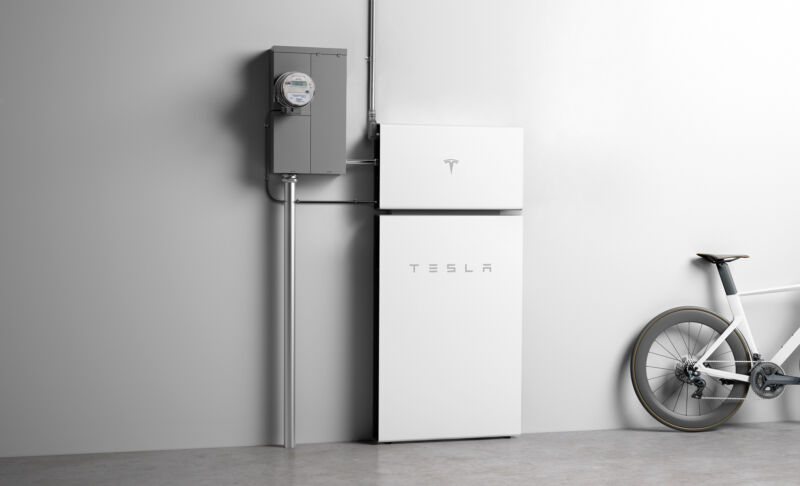
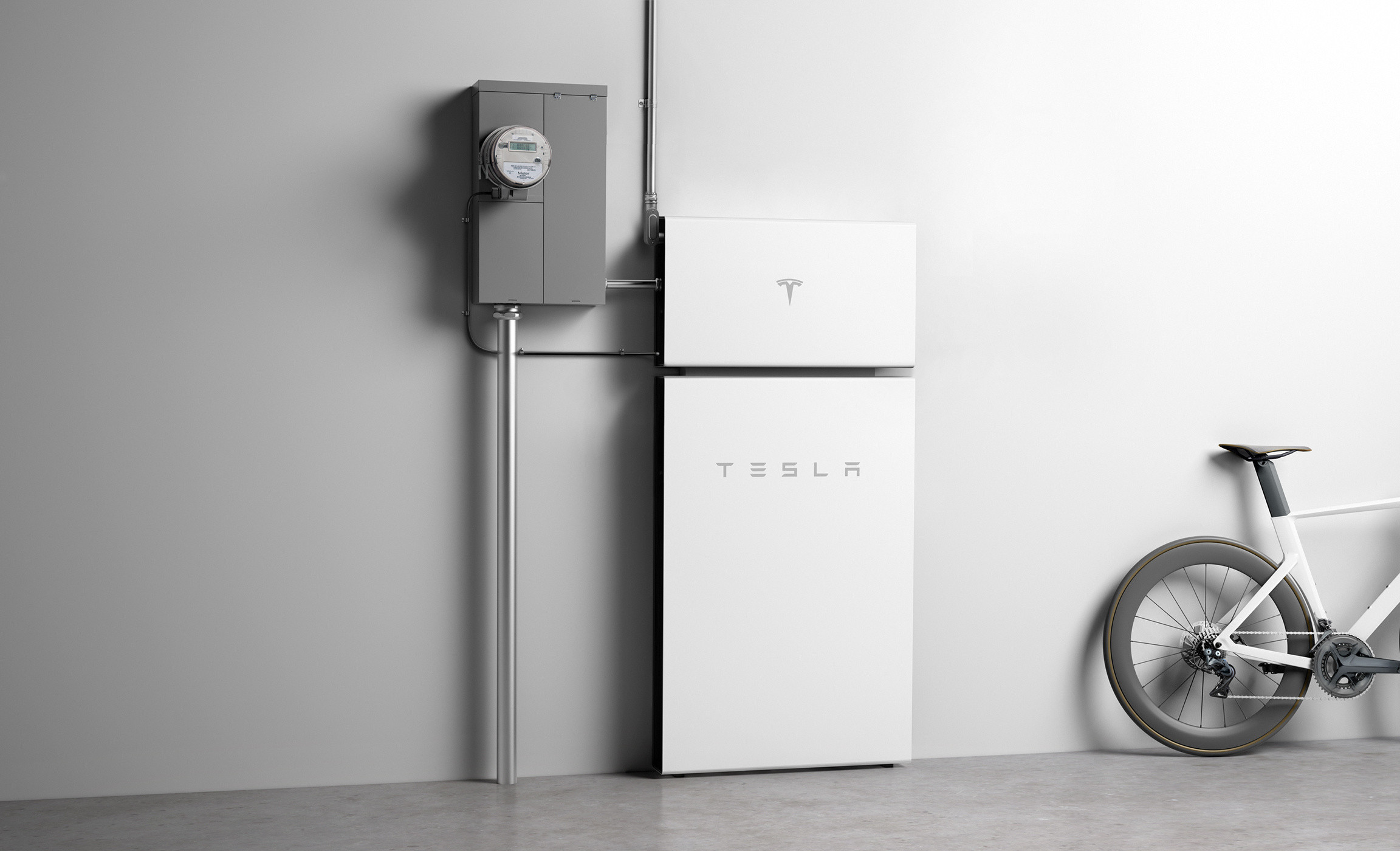
Last week, Tesla announced a program for California-based owners of its home battery products. Sign up with the company, and you'd become part of what the company calls a "virtual power plant." You would be able to use your battery to keep the grid stable during periods of high demand and be well-compensated for the electrons.
While this may conjure images of Powerwall batteries across the state sending electricity to the grid during a crisis, that doesn't appear to be what's happening here. Instead, the batteries will be taking part in a utility's program that's designed to reduce demand, which the utility company will presumably do by using the battery to supply some of the demand inside the battery owner's house. It's a clever way for homeowners to take advantage of a program that's otherwise limited to commercial users.
It's an emergency
Tesla's announcement of the program says that it will be part of Pacific Gas and Electric Company's (PG&E, a California utility) Emergency Load Reduction Program, which we'll focus on in the next section. At the moment, we'll look at what participants will end up doing.
Keep it Clean. Please avoid obscene, vulgar, lewd,
racist or sexually-oriented language. PLEASE TURN OFF YOUR CAPS LOCK. Don't Threaten. Threats of harming another
person will not be tolerated. Be Truthful. Don't knowingly lie about anyone
or anything. Be Nice. No racism, sexism or any sort of -ism
that is degrading to another person. Be Proactive. Use the 'Report' link on
each comment to let us know of abusive posts. Share with Us. We'd love to hear eyewitness
accounts, the history behind an article.


(0) comments
Welcome to the discussion.
Log In
Keep it Clean. Please avoid obscene, vulgar, lewd, racist or sexually-oriented language.
PLEASE TURN OFF YOUR CAPS LOCK.
Don't Threaten. Threats of harming another person will not be tolerated.
Be Truthful. Don't knowingly lie about anyone or anything.
Be Nice. No racism, sexism or any sort of -ism that is degrading to another person.
Be Proactive. Use the 'Report' link on each comment to let us know of abusive posts.
Share with Us. We'd love to hear eyewitness accounts, the history behind an article.