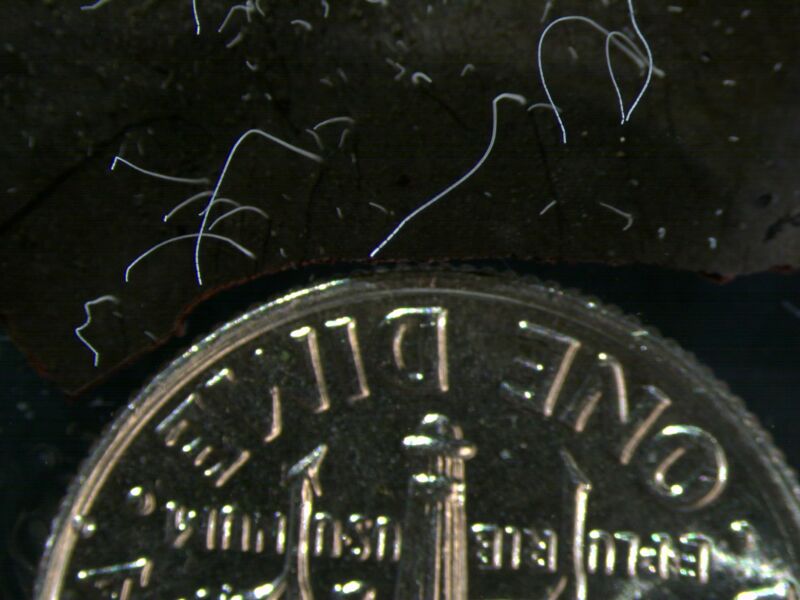
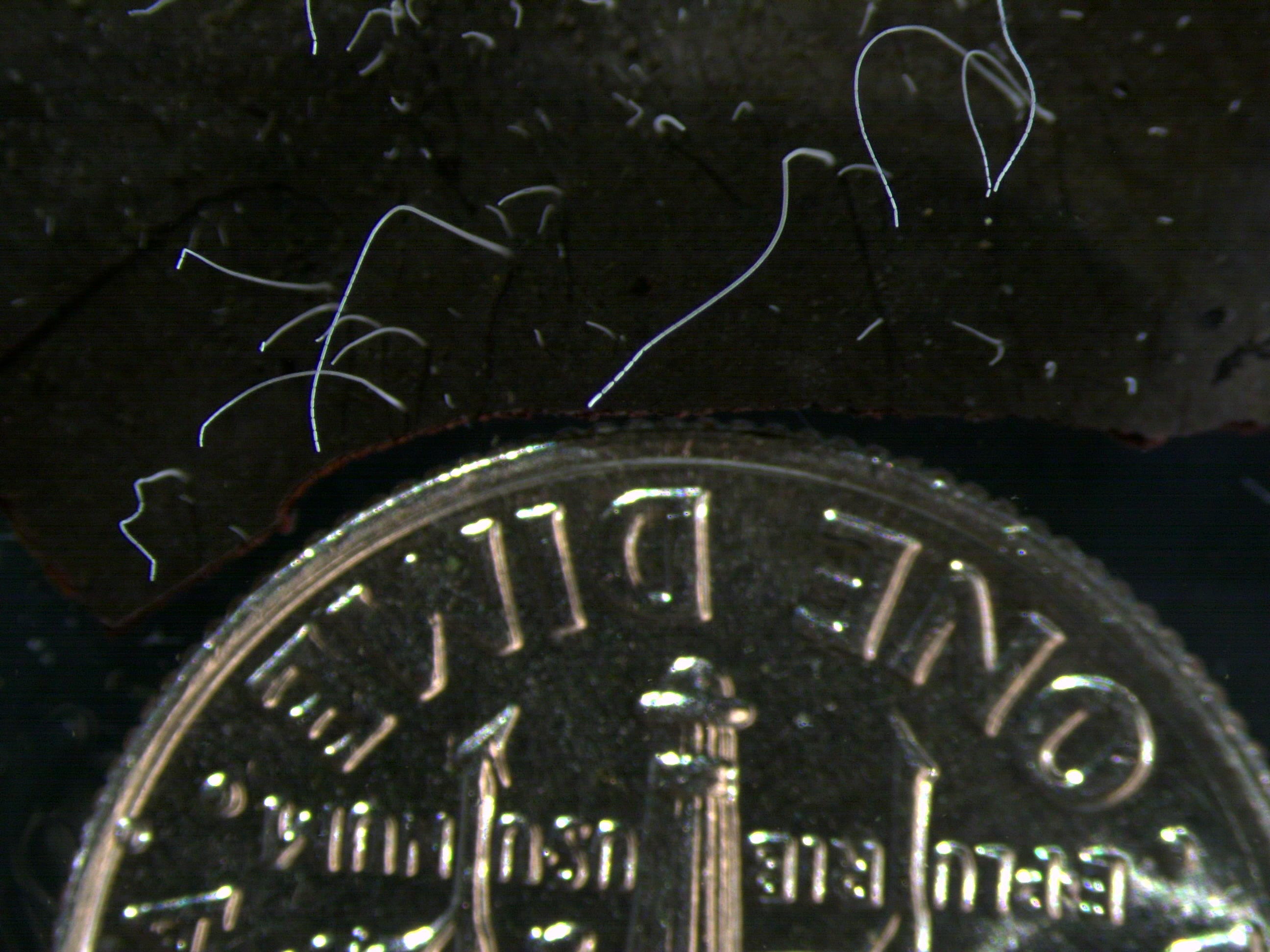
Enlarge/ The bacteria, Ca. Thiomargarita magnifica, discovered in the French Caribbean mangroves is a member of the genus Thiomargarita. (credit: Tomas Tyml)
Clinging to sunken debris in shallow, marine mangrove forests in the French Caribbean, tiny thread-like organisms—perfectly visible to the naked eye—have earned the title of the largest bacteria ever known.
Measuring around a centimeter long, they are roughly the size and shape of a human eyelash, batting away the competition at 5,000 times the size of garden-variety bacteria and 50 times the size of bacteria previously considered giant. In human terms, this is akin to coming across a person as tall as Mount Everest.
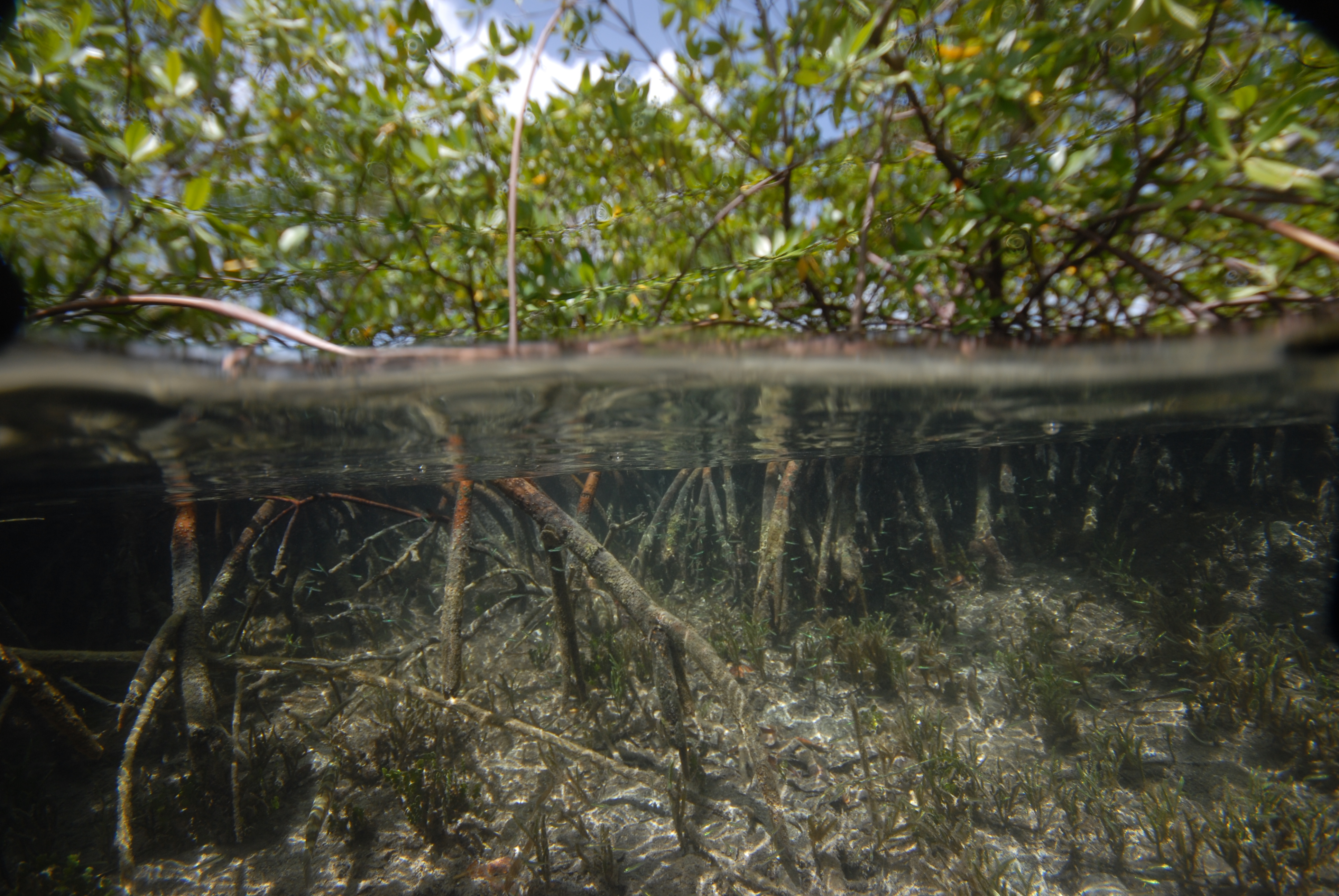
Olivier Gros, a biologist at the University of the Antilles, discovered the prokaryotes in 2009, noticing them gently swaying in the sulfur-rich waters among the mangroves in the Guadeloupe archipelago. The bacteria clung to the leaves, branches, oyster shells, and bottles that sunk into the tropical swamp, Gros said in a press briefing.
Keep it Clean. Please avoid obscene, vulgar, lewd,
racist or sexually-oriented language. PLEASE TURN OFF YOUR CAPS LOCK. Don't Threaten. Threats of harming another
person will not be tolerated. Be Truthful. Don't knowingly lie about anyone
or anything. Be Nice. No racism, sexism or any sort of -ism
that is degrading to another person. Be Proactive. Use the 'Report' link on
each comment to let us know of abusive posts. Share with Us. We'd love to hear eyewitness
accounts, the history behind an article.


(0) comments
Welcome to the discussion.
Log In
Keep it Clean. Please avoid obscene, vulgar, lewd, racist or sexually-oriented language.
PLEASE TURN OFF YOUR CAPS LOCK.
Don't Threaten. Threats of harming another person will not be tolerated.
Be Truthful. Don't knowingly lie about anyone or anything.
Be Nice. No racism, sexism or any sort of -ism that is degrading to another person.
Be Proactive. Use the 'Report' link on each comment to let us know of abusive posts.
Share with Us. We'd love to hear eyewitness accounts, the history behind an article.