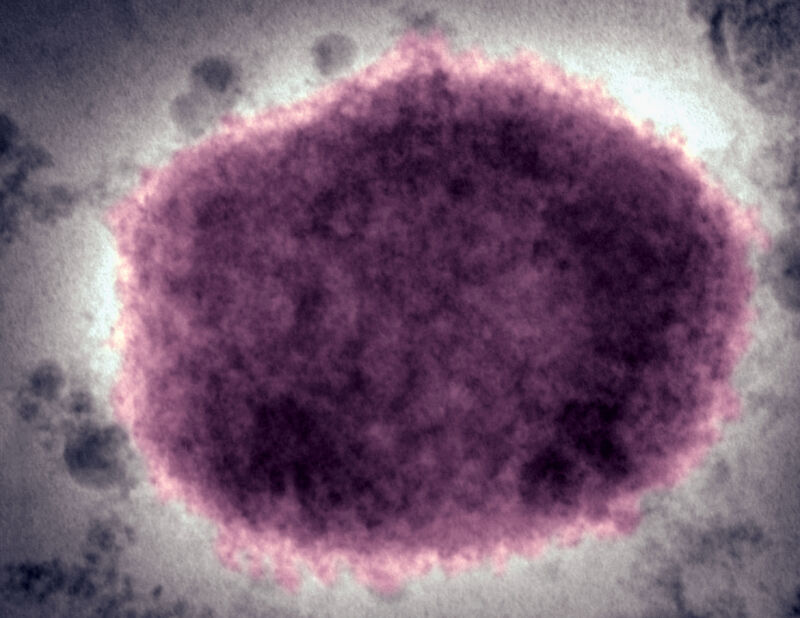
Enlarge/ A negative stain electron micrograph of a monkeypox virus virion in human vesicular fluid. (credit: Getty | BSIP)
The World Health Organization will convene its emergency committee of expert advisors Thursday, June 23, to consider whether it should declare the growing, multinational monkeypox outbreak a public health emergency of international concern (PHEIC).
As of Tuesday, June 14, WHO has received reports of more than 1,600 confirmed monkeypox cases and almost 1,500 suspected cases from 39 countries. Those countries include eight in which monkeypox infections were previously known to spill over from animals, and 32 newly affected countries, most of which are in Europe, but also include Australia and countries in the Americas and Eastern Mediterranean.
There have been 72 monkeypox deaths reported this year from African countries that have long been affected by limited spillovers. So far, there are no confirmed deaths among cases in newly affected countries, but WHO is seeking verification of a reported monkeypox-related death in Brazil.
Keep it Clean. Please avoid obscene, vulgar, lewd,
racist or sexually-oriented language. PLEASE TURN OFF YOUR CAPS LOCK. Don't Threaten. Threats of harming another
person will not be tolerated. Be Truthful. Don't knowingly lie about anyone
or anything. Be Nice. No racism, sexism or any sort of -ism
that is degrading to another person. Be Proactive. Use the 'Report' link on
each comment to let us know of abusive posts. Share with Us. We'd love to hear eyewitness
accounts, the history behind an article.


(0) comments
Welcome to the discussion.
Log In
Keep it Clean. Please avoid obscene, vulgar, lewd, racist or sexually-oriented language.
PLEASE TURN OFF YOUR CAPS LOCK.
Don't Threaten. Threats of harming another person will not be tolerated.
Be Truthful. Don't knowingly lie about anyone or anything.
Be Nice. No racism, sexism or any sort of -ism that is degrading to another person.
Be Proactive. Use the 'Report' link on each comment to let us know of abusive posts.
Share with Us. We'd love to hear eyewitness accounts, the history behind an article.