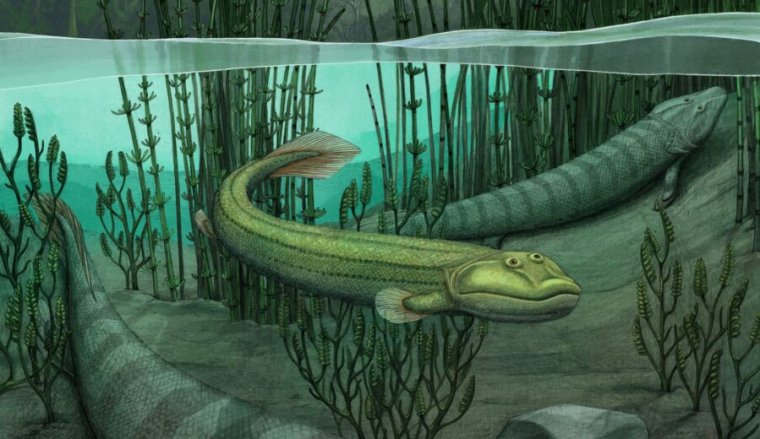
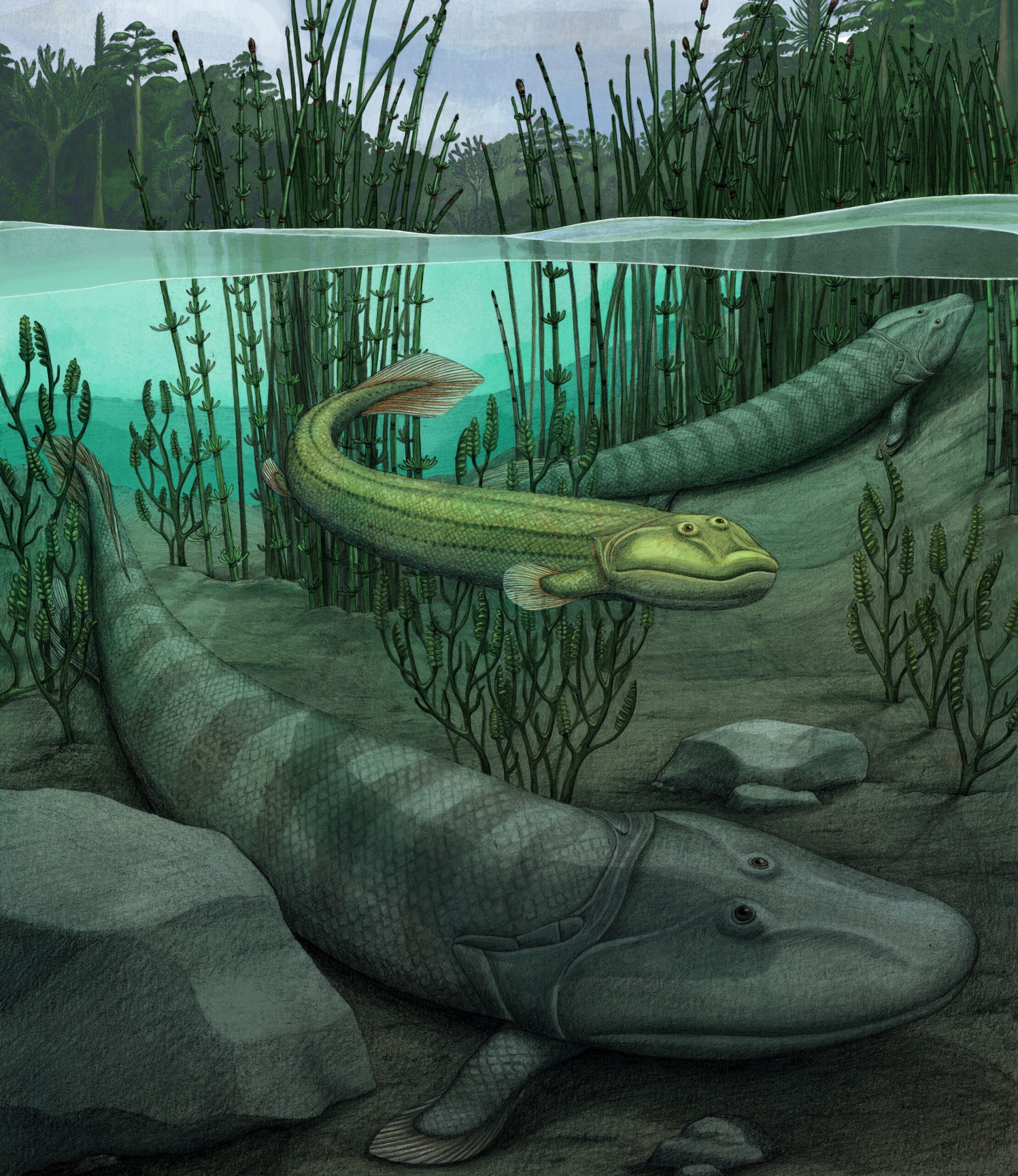
Enlarge/ An artist’s vision of Qikiqtania enjoying its fully aquatic, free-swimming lifestyle. (credit: Alex Boersma/CC BY-ND)
Approximately 365 million years ago, one group of fishes left the water to live on land. These animals were early tetrapods, a lineage that would radiate to include many thousands of species including amphibians, birds, lizards, and mammals. Human beings are descendants of those early tetrapods, and we share the legacy of their water-to-land transition.
But what if, instead of venturing onto the shores, they had turned back? What if these animals, just at the cusp of leaving the water, had receded to live again in more open waters?
A new fossil suggests that one fish, in fact, did just that. In contrast to other closely related animals, which were using their fins to prop their bodies up on the bottom of the water and perhaps occasionally venturing out onto land, this newly discovered creature had fins that were built for swimming.
Keep it Clean. Please avoid obscene, vulgar, lewd,
racist or sexually-oriented language. PLEASE TURN OFF YOUR CAPS LOCK. Don't Threaten. Threats of harming another
person will not be tolerated. Be Truthful. Don't knowingly lie about anyone
or anything. Be Nice. No racism, sexism or any sort of -ism
that is degrading to another person. Be Proactive. Use the 'Report' link on
each comment to let us know of abusive posts. Share with Us. We'd love to hear eyewitness
accounts, the history behind an article.


(0) comments
Welcome to the discussion.
Log In
Keep it Clean. Please avoid obscene, vulgar, lewd, racist or sexually-oriented language.
PLEASE TURN OFF YOUR CAPS LOCK.
Don't Threaten. Threats of harming another person will not be tolerated.
Be Truthful. Don't knowingly lie about anyone or anything.
Be Nice. No racism, sexism or any sort of -ism that is degrading to another person.
Be Proactive. Use the 'Report' link on each comment to let us know of abusive posts.
Share with Us. We'd love to hear eyewitness accounts, the history behind an article.