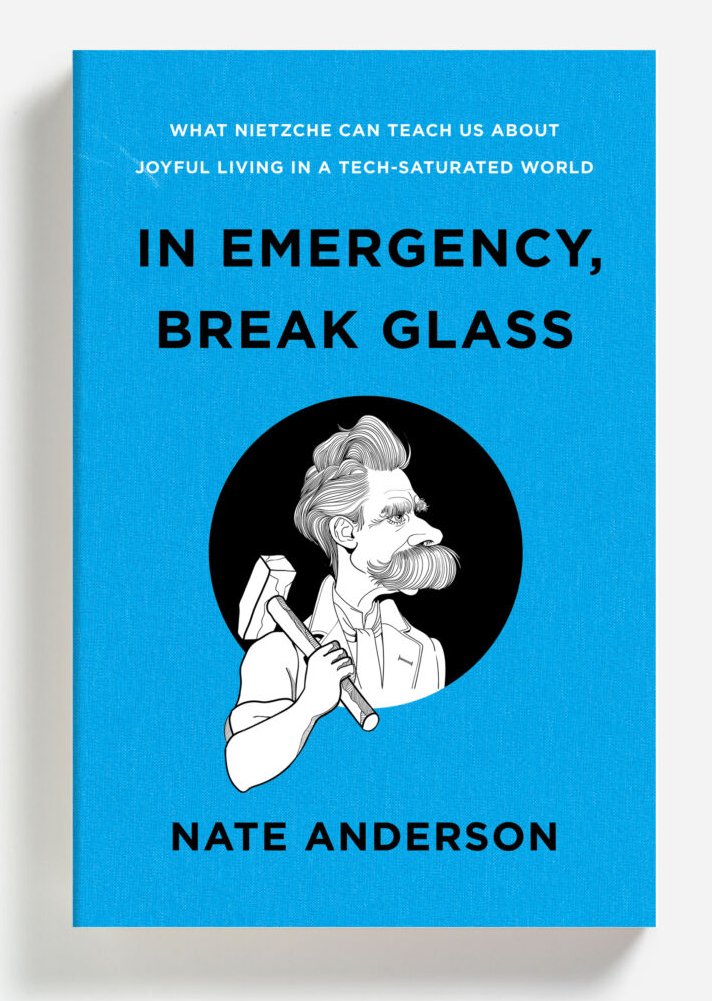
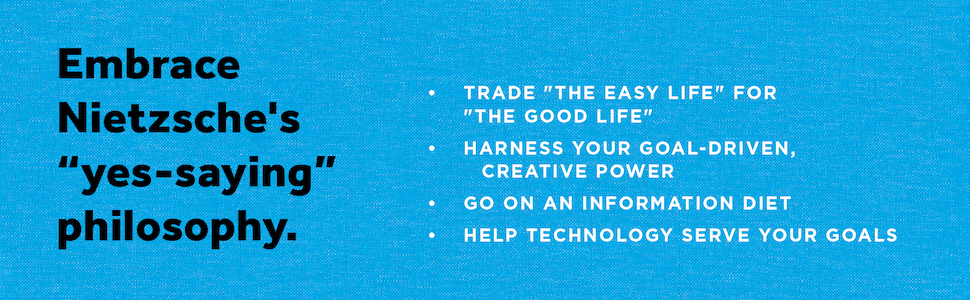
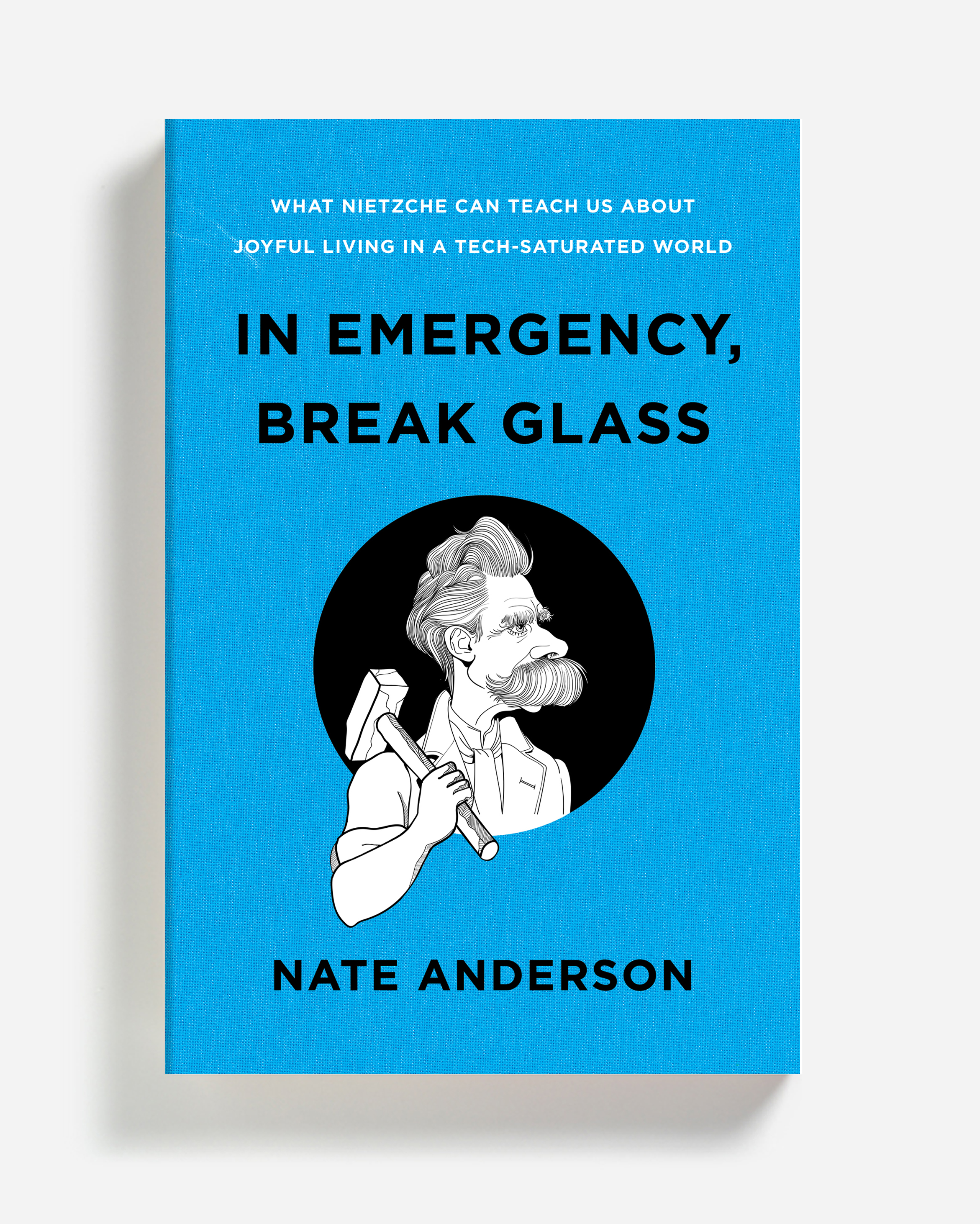
The book "adapts Friedrich Nietzsche’s passionate quest for meaning into a world overwhelmed by 'content.' Written long before the advent of smartphones, Nietzsche’s aphoristic philosophy advocated a fierce mastery of attention, a strict information diet, and a powerful connection to the natural world. Drawing on Nietzsche’s work, technology journalist Nate Anderson advocates for a life of goal-oriented, creative exertion as more meaningful than the 'frictionless' leisure often promised by our devices." In a starred review, Publisher's Weekly called it "a must-read for anyone overwhelmed by the Information Age." Also, it has jokes.
No one ever accused Nietzsche of modesty. The man was convinced of his own world-shaking destiny, which must have been tough to sustain when only a few hundred people were reading his books. Still, Nietzsche offered his then-nonexistent readership tips for properly absorbing his works—especially his more “aphoristic” books. Nietzsche describes his ideal reader in the preface to Daybreak:
Keep it Clean. Please avoid obscene, vulgar, lewd,
racist or sexually-oriented language. PLEASE TURN OFF YOUR CAPS LOCK. Don't Threaten. Threats of harming another
person will not be tolerated. Be Truthful. Don't knowingly lie about anyone
or anything. Be Nice. No racism, sexism or any sort of -ism
that is degrading to another person. Be Proactive. Use the 'Report' link on
each comment to let us know of abusive posts. Share with Us. We'd love to hear eyewitness
accounts, the history behind an article.


(0) comments
Welcome to the discussion.
Log In
Keep it Clean. Please avoid obscene, vulgar, lewd, racist or sexually-oriented language.
PLEASE TURN OFF YOUR CAPS LOCK.
Don't Threaten. Threats of harming another person will not be tolerated.
Be Truthful. Don't knowingly lie about anyone or anything.
Be Nice. No racism, sexism or any sort of -ism that is degrading to another person.
Be Proactive. Use the 'Report' link on each comment to let us know of abusive posts.
Share with Us. We'd love to hear eyewitness accounts, the history behind an article.