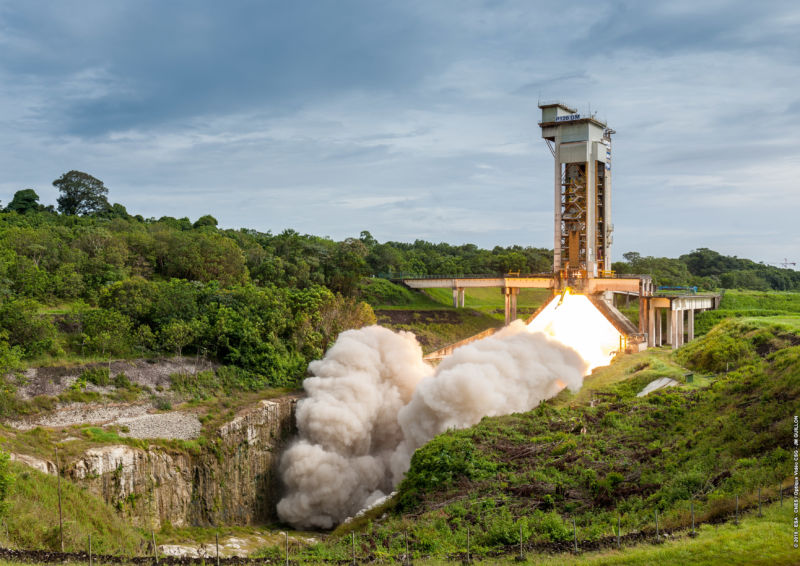
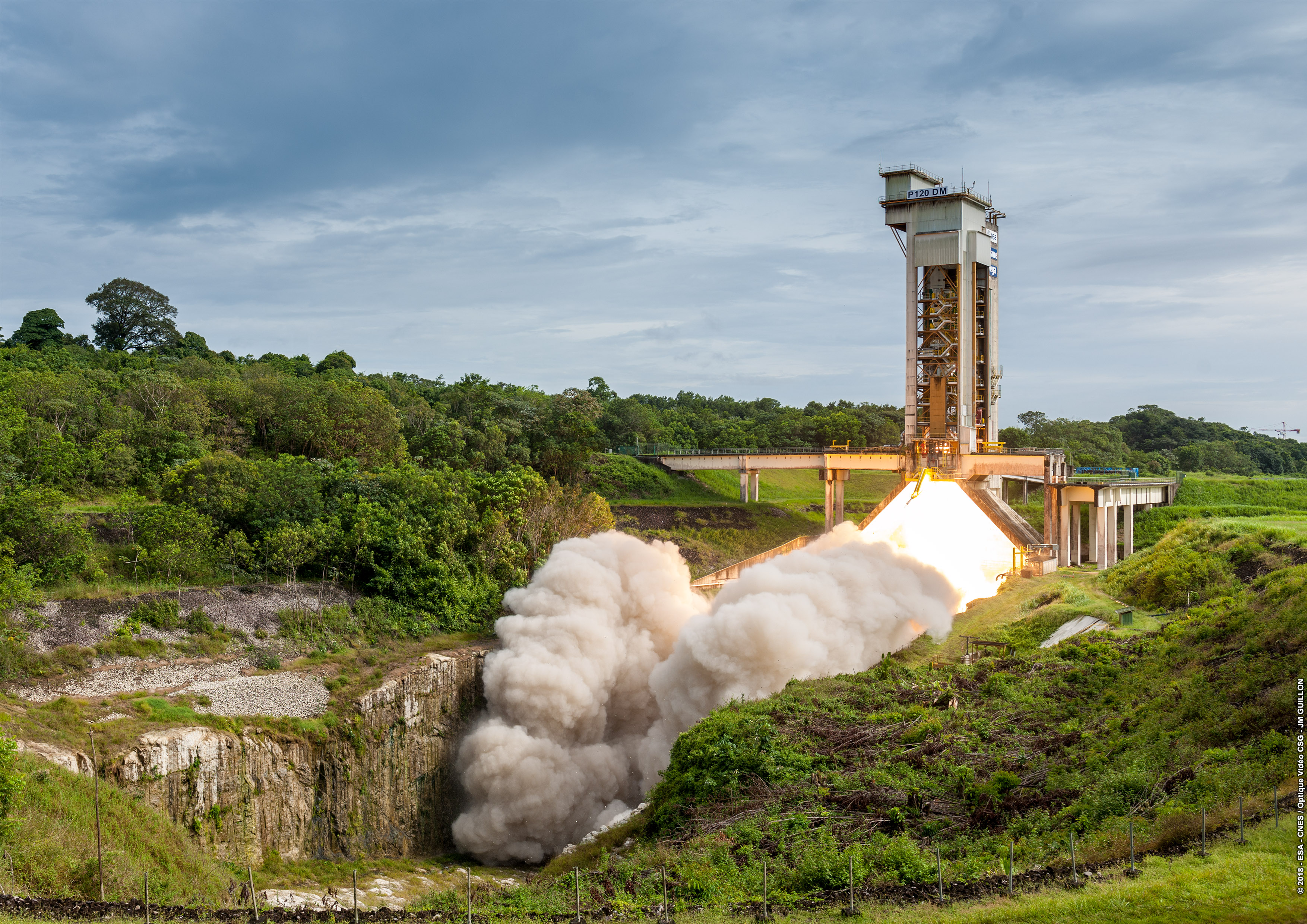
Enlarge/ First hot-firing of the P120C solid-rocket motor that will be used by Europe's new Vega-C and Ariane 6 rockets. (credit: ESA/CNES)
Europe's much-anticipated next-generation rocket, which has a roughly comparable lift capacity to SpaceX's Falcon 9 booster, was originally due to launch before the end of 2020.
The Ariane 6 rocket has subsequently been delayed a few times, but before this week the European Space Agency had been holding to a debut launch date before the end of this year. However, during a BBC interview on Monday, European Space Agency Director General Josef Aschbacher said the rocket would not fly until sometime in 2023.
On Thursday, during a background call with reporters, a senior European Space Agency official provided more information about the reasons for the additional delay.
Keep it Clean. Please avoid obscene, vulgar, lewd,
racist or sexually-oriented language. PLEASE TURN OFF YOUR CAPS LOCK. Don't Threaten. Threats of harming another
person will not be tolerated. Be Truthful. Don't knowingly lie about anyone
or anything. Be Nice. No racism, sexism or any sort of -ism
that is degrading to another person. Be Proactive. Use the 'Report' link on
each comment to let us know of abusive posts. Share with Us. We'd love to hear eyewitness
accounts, the history behind an article.


(0) comments
Welcome to the discussion.
Log In
Keep it Clean. Please avoid obscene, vulgar, lewd, racist or sexually-oriented language.
PLEASE TURN OFF YOUR CAPS LOCK.
Don't Threaten. Threats of harming another person will not be tolerated.
Be Truthful. Don't knowingly lie about anyone or anything.
Be Nice. No racism, sexism or any sort of -ism that is degrading to another person.
Be Proactive. Use the 'Report' link on each comment to let us know of abusive posts.
Share with Us. We'd love to hear eyewitness accounts, the history behind an article.