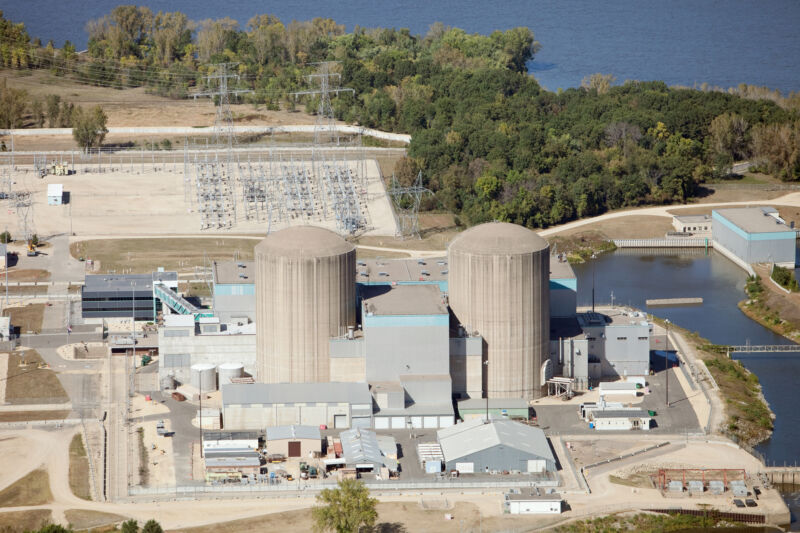
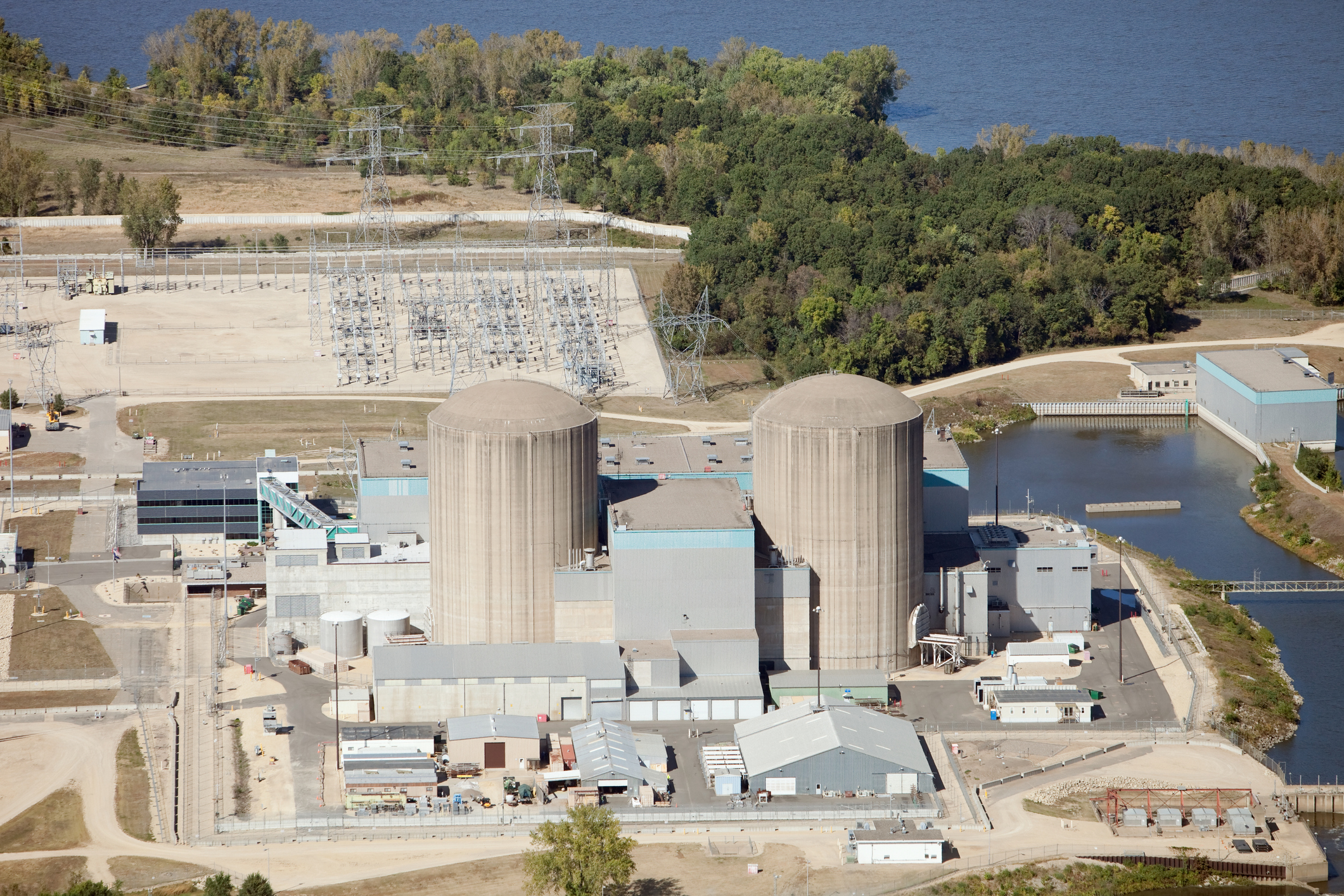
Enlarge/ An aerial view of the Prairie Island Nuclear Power Plant, near Red Wing, Minnesota. (credit: Getty Images)
Nuclear plants occupy an odd position in the US's energy landscape. They're currently the most expensive form of generation out there, and many of the plants are a decade or more past their planned life span. At the same time, nuclear power is the US's largest single source of low-carbon electricity generation, accounting for almost as much as the wind, solar, and hydro combined.
So the vast expansion of cheaper wind, solar, and natural gas has been driving nuclear plant closures—a dozen over the past decade. But those closures are making it harder for the US to limit its carbon emissions. Now, the federal government has decided it has to step in with money to keep those plants open.
On Tuesday, the US Department of Energy announced it was releasing guidance that would help nuclear plant operators apply for a slice of $6 billion available under its new Civil Nuclear Credit Program. The money will be coming out of the funds allocated through the infrastructure law that was the centerpiece of President Joe Biden's legislative accomplishments.
Keep it Clean. Please avoid obscene, vulgar, lewd,
racist or sexually-oriented language. PLEASE TURN OFF YOUR CAPS LOCK. Don't Threaten. Threats of harming another
person will not be tolerated. Be Truthful. Don't knowingly lie about anyone
or anything. Be Nice. No racism, sexism or any sort of -ism
that is degrading to another person. Be Proactive. Use the 'Report' link on
each comment to let us know of abusive posts. Share with Us. We'd love to hear eyewitness
accounts, the history behind an article.


(0) comments
Welcome to the discussion.
Log In
Keep it Clean. Please avoid obscene, vulgar, lewd, racist or sexually-oriented language.
PLEASE TURN OFF YOUR CAPS LOCK.
Don't Threaten. Threats of harming another person will not be tolerated.
Be Truthful. Don't knowingly lie about anyone or anything.
Be Nice. No racism, sexism or any sort of -ism that is degrading to another person.
Be Proactive. Use the 'Report' link on each comment to let us know of abusive posts.
Share with Us. We'd love to hear eyewitness accounts, the history behind an article.