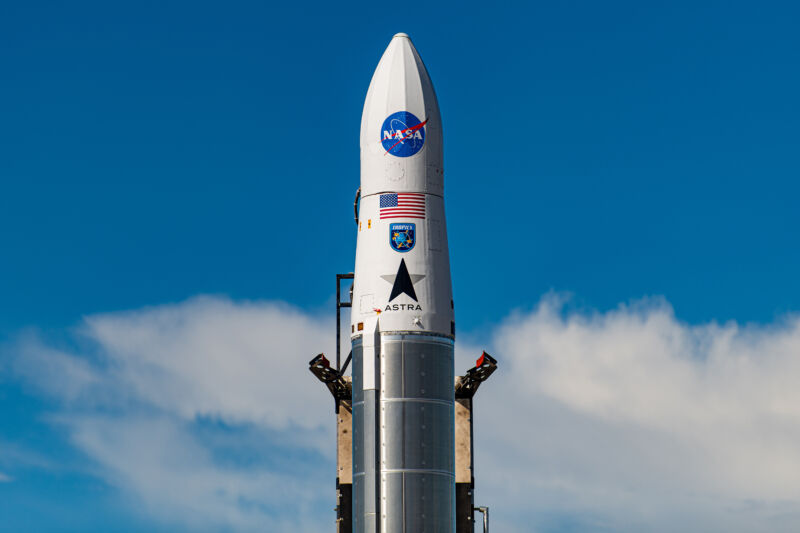
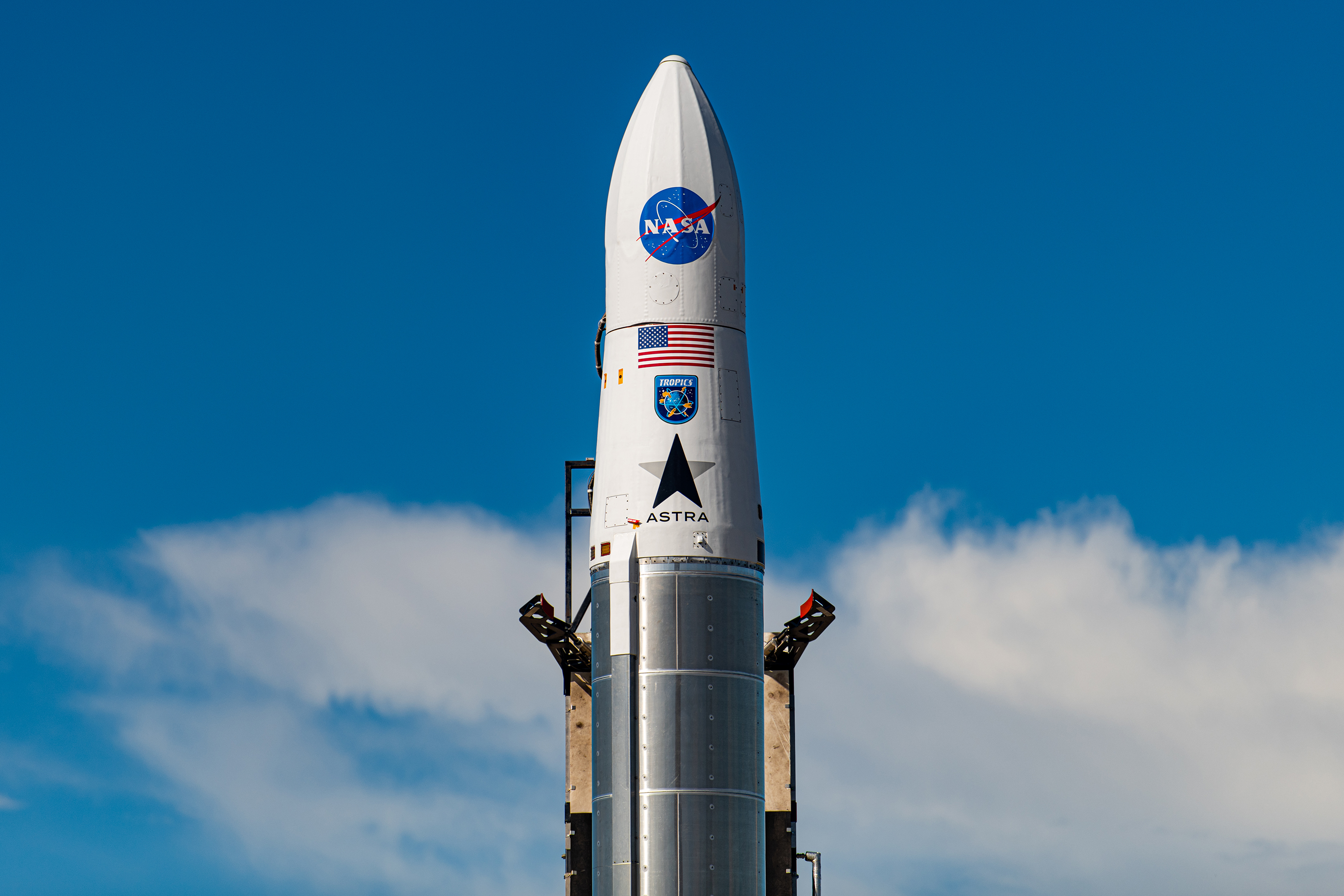
Enlarge/ Rocket 3.0 is seen on the launch pad in June 2022 ahead of the launch of a TROPICS mission for NASA. (credit: Astra/Brady Kenniston)
Astra Space emerged from stealth mode two and a half years ago with a bold vision: It would build inexpensive rockets quickly and with a tolerance for some failure. The idea was simple. If Astra's small satellite customers would accept a bit of risk, the launch company could cut down on its testing, analysis, and redundancy in design. In turn, Astra would pass those launch savings along to customers.
"It's a no-brainer from an economics perspective that for these kinds of payloads, you should not be targeting 100 percent reliability," Astra co-founder Adam London said in February 2020.
At the time, the company was preparing for the first flight of its Rocket 3 vehicle, a micro launcher capable of lofting about 50 kg into low Earth orbit. That rocket exploded in March 2020 during a wet dress rehearsal test on the launch pad.
Keep it Clean. Please avoid obscene, vulgar, lewd,
racist or sexually-oriented language. PLEASE TURN OFF YOUR CAPS LOCK. Don't Threaten. Threats of harming another
person will not be tolerated. Be Truthful. Don't knowingly lie about anyone
or anything. Be Nice. No racism, sexism or any sort of -ism
that is degrading to another person. Be Proactive. Use the 'Report' link on
each comment to let us know of abusive posts. Share with Us. We'd love to hear eyewitness
accounts, the history behind an article.


(0) comments
Welcome to the discussion.
Log In
Keep it Clean. Please avoid obscene, vulgar, lewd, racist or sexually-oriented language.
PLEASE TURN OFF YOUR CAPS LOCK.
Don't Threaten. Threats of harming another person will not be tolerated.
Be Truthful. Don't knowingly lie about anyone or anything.
Be Nice. No racism, sexism or any sort of -ism that is degrading to another person.
Be Proactive. Use the 'Report' link on each comment to let us know of abusive posts.
Share with Us. We'd love to hear eyewitness accounts, the history behind an article.